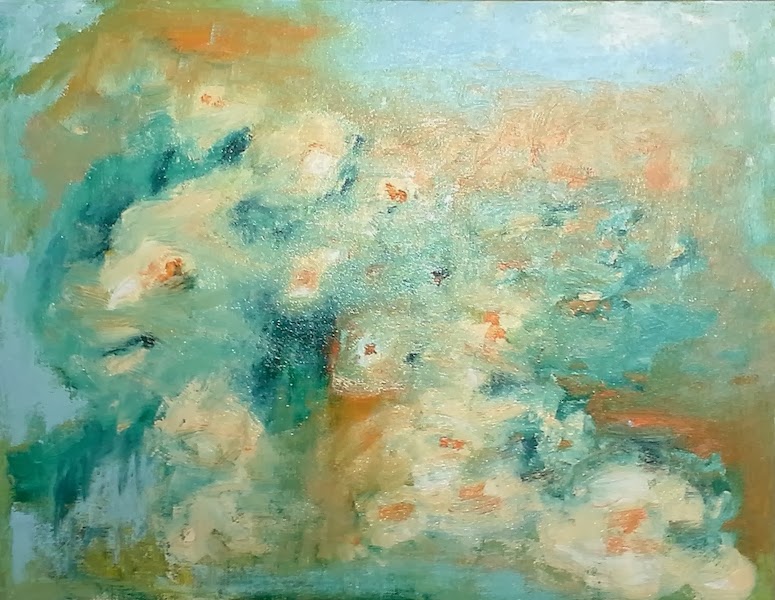
Friday, May 30, 2014

Do the Unexpected

"Manet did not do the expected. He was a pioneer. He followed his individual whim. Told the public what he wanted it to know, not the timeworn things the public already knew and thought it wanted to hear again. The public was very much offended." 

- Robert Henri, The Art Spirit, pp. 206-7.

Manet, Luncheon on the Grass, 1863

"Art must take reality by surprise." 

- Francoise Sagan

Manet, Olympia, 1863
A nice blend of prediction and surprise seem to be at the heart of the best art.
- Wendy Carlos
Manet, The Races at Longchamps, 1864

The real artist’s work is a surprise to himself.
- Robert Henri
Manet, The Railway, 1872

"Do not know yourself.  I want to continue to surprise me."
- Arielle Dombasle
Manet, A Bar at the Folies-Bergere, 1882


Originality Is About Being Honest, Not About Being Different

All images of paintings by Camille Pisarro
“The originality here is profoundly human. It is not derived from a certain facility of hand or from a falsification of nature. It stems from the very temperament of the painter himself and comprises a feeling for truth resulting from an inner conviction. Never before have paintings appeared to me to possess such an overwhelming dignity.” - Emile Zola on Pisarro at the 1860 Paris Salon
Originality, integrity, honesty, risk - I think of these words as very much connected. You cannot have originality without risking failure (or worse - rejection!). It won't do to just fall back on what others have done. BUT, I think you have to be infused with  tradition, to have internalized the beloved works that still blaze forth and enhance our world. One  draws sustaining water from many wells (i.e. Steal like an artist! And who doesn't? By all means, steal things from the art you love and use them - as all artists have always done, even the greatest masters. If anyone says anything, quote Goethe: “We are shaped and fashioned by what we love.”)

But that's largely just about technique. Originality for Zola, the kind he recognized in Pisarro's work, comes from trust in oneself. 

It's something more mysterious that happens while you're experimenting and taking risks while using the things you've stolen from the art you love. Of course, what we're talking about is an ideal (far from my daily reality at least). But Zola's brief words have a lot to say about how we might approach the form of contemplation called painting.
The "profoundly human" originality referred to above comes neither from a "way" of painting, a special technique ("facility of hand") nor from more stylized or non-traditional - or for that matter hackneyed - subject matter ("falsification of nature"). 
Its true source is the personhood of the artist him/herself. Supposedly it springs from what Zola calls "an inner conviction," a phrase that anticipates Kandinsky's notion of "inner necessity" or the "inner need" of the artist for spiritual expression. 
To me this means recognizing moments of clear "vision" and striving to create from below the surface, to express something real from a place of true presence, apart from  (and paradoxically intimately connected to!) what (subject) or how (technique) one is painting.
And this isn't the province of a few. We all have something real to which we can testify. 
The problem is that most of the time (in my experience at least) the mad buzz and swelter of ideas, memories, doubts, and a thousand other perceptions and sensations that assail one in the act of painting disrupt the original impulse (thus engendering the burning desire to try again tomorrow - yes! the joy of painting!).
One can only keep looking, stealing, thinking, making things, taking risks, failing, and maybe managing to recognize and nurture "inner conviction" by sensing its truth when it appears.
According to Austin Kleon (author of "Steal Like and Artist" linked above), it really comes down to doing good work and showing it to people: but of course, as he writes, "'Do good work,' is incredibly hard. There are no shortcuts. Make stuff every day. Fail. Get better." Take risks.

The reward? Eventually we get to make the art that we think should be getting made but isn't, to write the books we want to read, create the music we want to hear in such a way that it will be for everyone and truly ours as well.
Anyway, that's the idea. 

Thursday, May 29, 2014

And We're Back

Sorry I've been out of touch! I've resolved to post more frequently, even if it's only a beautiful work of art, an inspiring quote, or an update on my own art and classes.

In that spirit, I give you ... Robert Henri.

Robert Henri, Agnes in Red

"We have great periods. Periods when we freshen, move forward into hopeful philosophy. Then comes the stamp of personal whim.

Technique becomes a tool, not an objective. We are interested and we have expressions we must make. All things are appreciated with an abundance of humor. There is an association with nature. Something happens between us and the flowers in a garden, a communication of gayety, a rhythm in the grass understood - something charming in a day's wash hung on the line - a song running through it all. Associations with nature. It's a state to be in and a state to paint in."

- Robert Henri, The Art Spirit, p. 207

Monhegan, by Robert Henri

~


Sunday, March 23, 2014

Sequencing: A Creative Exercise for Oils

The River Gallery School sells a booklet on the process for $15.
A couple of weeks ago I plunged into a painting class while visiting friends in Vermont. I hadn't planned on it, but I enjoyed being the student for a change, and I encountered an exercise called "sequencing" that's great for total beginners and veterans alike.

Workshop leader Lydia Thomson explains the process. "These are oils, and therefore .... they're beautiful," she said.
Developed at Brattleboro's River Gallery School of Art, "sequencing" involves painting three small pieces at once. We made seascapes on card-stock - the cheaper the better, as this is about enjoying the process.

It goes like this: put on latex gloves, scoop up a dollop of cold wax medium, and kneed it into the surface of three small pieces of canva-paper, card stock, or whatever. Start on the left canvas and work to the right, making similar gestures each time.

These three little guys were taped down to the board at the start.

Here's the setup: a stick, a few rags, a razor for scraping off "mistakes," three pieces of card stock taped to a sturdy surface and latex gloves, as your fingers do the painting. The palette consists of a spectrum of paints surrounding two transparent earths and a generous dollop of COLD WAX MEDIUM. We used Dorland's Wax Medium:


Dorland's is wonderful stuff. Cold wax is smooth to the touch, takes paint in a manner that allows good control of layering and blending, and acts as a drying agent to boot. I loved the meditative, tactile experience of physically massaging the lush oil colors into the silky wax medium.

As soon as someone finished a sequence, he or she would tape all three to the wall. Click it to see them up close.

Once you've got wax on all three, you rub on a transparent earth color to tone the wax under-layer, blending until it's covered completely (we used a transparent brown-pink, but you could also use something like transparent oxide, Indian Yellow, or burnt sienna). This, explained workshop leader Lydia Thomson, acts as a metaphor for sunlight (she encouraged us to use all our colors metaphorically rather than literally).

After you've toned the paper, you compose your seascape using whatever colors you feel, working them over and into the wax on each piece, moving from left to right, doing the same thing each time.

At work at the River Gallery school

There's a meditative quality in the repetitive nature of working on the three pieces at once, introducing a color to the first one, then the same color to the second and then the third, and so on, leaving traces of the same gestures on each painting.

It's great for beginners because it involves no solvents, no brushes, no mixing, and minimal mess. Experienced painters will relish it as a reintroduction to the sensuous nature of oil paints and a fertile field for the development of new ideas for larger work.

One of my sequences.

This one had a Richter-like vibe.

Working fast is good. We all had time to make multiple sequences.
This is something we'll be trying with my Tuesday painting workshop in Lowell this week. It's an excellent way of unleashing creativity and a very refreshing way of experiencing oil paint.

Monday, March 17, 2014

Spring Tufts

File under "humble subject matter." One of art's tasks in our time is to reveal beauty in the mundane, to raise the commonplace to the level of the extraordinary. 

I've been struck by the beauty that painters through the ages have wrung from the humble tuft of weedy grass. Once again the lesson is that subject matter may easily be the least important aspect of painting. These paintings portray bits of leaf and stem that people pass hundreds of times without noticing. Art such as this helps to remind us that anything can become the basis for amazing, meaningful art if only it's seen for its expressive potential. 

Here are some anonymous tufts of grass and bracken, a few bare, weedy shoots and branches to remind us that yes, spring really is going to come eventually.

Don't be fooled by the run-of-the-mill plant life in these! These works repay careful consideration and can tell us a lot about design work, compositional choices, the application of the paint, and the evocation of mood, even given the most unremarkable starting-places. Here is proof that the poetic and the sublime need not depend on grandiose or dramatic subject matter.

It ain't what you paint; it's how you see it.

The first three are by contemporary Philly painter Alex Kanevsky. Sorry about the lack of titles- I hope to clothe the naked paintings in them later.


These four are by Leon Bonvin (French, 1834-1866), whom I am tempted to crown "King and Master of the Tuft."


One of the first western artists to elevate the tuft to the level of immortal representation is probably Leonardo, but here's a beautifully realized work by Albrecht Durer to look at instead.

Albrecht Durer, The Large Piece of Turf, 1503
Look how Ivan Shishkin can pull beauty out of the weeds!

Ivan Shishkin

Here'sa typical zen style painting of seemingly random bamboo shoots by Araki Jippo (1872-1944).


Bamboo Shoots, Araki Jippo (1872-1944)


Dennis Miller Bunker gets a shoutout not for painting individual pieces of turf so much as for helping to initiate the painterly attitude toward ordinary scenery still celebrated among plein air painters today.
Dennis Miller Bunker, The Pool, Medfield, 1889

And to bring it back around to the contemporary, I leave you with this one is by Robert Baart and an invitation to participate by drawing my attention to your own favorite paintings of the most commonplace little clumps of natural beauty.

Robert Baart, Water Sedge

Thursday, March 13, 2014

The First Painting I Ever Saw

My parents had a print of a European harbor scene that occupied a place of honor in my boyhood home. It hung over our wooden record cabinet, or “hi-fi” as we called it. 

Although I remember gazing dreamily at the magical world it opened into, I have no idea who painted the original. As closely as I can recall, it looked something like this:


Maybe it was Dutch. All I know is that it had boats with sails, a mist-veiled coast, and a big blowzy sky.

Other than that print and the intriguing stained glass windows in Christ Church, Oyster Bay, Long Island, the only other art I saw as a young child was the ceiling mural of the Oyster BayPost Office.

This was really something special. It was, clearly, a real painting (a fresco, actually). It was a work of elegance and imagination. It was really a magical world. And it was on the ceiling!

Arthur Sturges's ceiling mural in the U.S. Post Office, Oyster Bay, Long Island

Funded by the depression government’s Works Project Administration program, “the vaulted ceiling was painted by Peixotto assistant, Arthur Sturges and depicts beautiful women representing different countries sending mail to North America on ships and planes. Mercury, the winged messenger, sits atop the dome to receive the mail with speed.” (Thank you WikiPedia!)
A ceiling that showed the sky! And even gods and goddesses inhabiting what appeared to be Heaven! But these celestial beings were doing things with little ships and planes -  implying that whatever was going on up there had something to do with the modern world we were standing in down here!

Art, then, was a sort of portal to another world that reflected back something about this one. I can still dimly recall the visit on which a grownup (either my mother or my grandmother) first pointed up at it. And now I’m painting skies myself.


New Sky, Oil on Wood, 18"x18," 2011

Plum Island Dusk, Oil on Canvas, 8" x 10," 2010

Plum Island Redux, Oil on Wood, 24" x  36," 2011

One of the secrets of painting effective skies, I think, is to watch what you're doing at the horizon. Blending the lowest, most distant clouds into wisps and streaks of light and color helps provide the sense of receding space. You get the feeling that the clouds highest in the picture are closest, while those furthest away gradually recede along the curvature - the "vaulted ceiling" - of the heavens.

Postscript

At the same post office, there’s an impressive ornamental flagpole base outside with an amusing story that goes with it (see “The Man in the Shed”). At the same time that the murals were done, the WPA sent a little-known immigrant from Bologna, Italy, named Leo Lentelli to produce a series of sculptures here. 


The story goes that once his chunk of granite had been put in place, Leo built a little shed around it. There he worked, shielding himself from the winter winds that rip through my old coastal hometown in the winter. Thanks Leo - you rule.

Sunday, March 2, 2014

Painting a Sensation

This week in my weekly painting workshop in Lowell we set ourselves the task of painting the sensation of flowers - we were to paint not the flowers themselves but the feeling of looking at them. I did a quick demo to show some strategies for painting abstractly.


My abstract floral demo

It didn't come out nearly as "flowery" as I intended, partly because I didn't mix all of my colors as judiciously as I should have. Nonetheless, the point was made. 

Next I asked everyone to take a minute to search their memories for a time when they were moved by looking at flowers - a garden with some special significance, perhaps, or that moment when you lean in to a flower to smell its fragrance and can almost feel the colors washing over your face. 

Then they mixed colors corresponding with that sensation and began placing them on the canvas according to a few stated formal principles of composition, principally "variety within unity."

They were all game for the experiment, brave souls! And much fine work was completed and many lessons learned. Every painting was, of course, different because each was so unique to the artist. 

Abstract floral by Cynthia DeSando

Garden, by Bill Reedy

After we tried flipping it, Bill thought this resembled clematis or another vine flower. I like it in both its vertical and horizontal orienations.

Abstract floral by JoLynne Murphy
Abstract Impressionist Flowers by Suzanne Hodge

The exercise also allowed everyone to concentrate on principles of design and pictorial organization (both intuitive and otherwise). It also offered a chance to explore the emotive properties of color and the "plastic" qualities of the paint itself- different ways to apply it using various brushes and other tools.Altogether it was great exercise. They all succeeded in using paint to tap into lived experience and personal sensations (rather than sitting down in front of something and trying to represent it relatively objectively). 

It's a great feeling to essentially make something out of nothing - to compose from personal experience is surely one of the essential aspects of the creation of meaningful art.